How to Size a Wellhead Gas Compressor: Flow, Pressure, Turndown, and Common Selection Mistakes
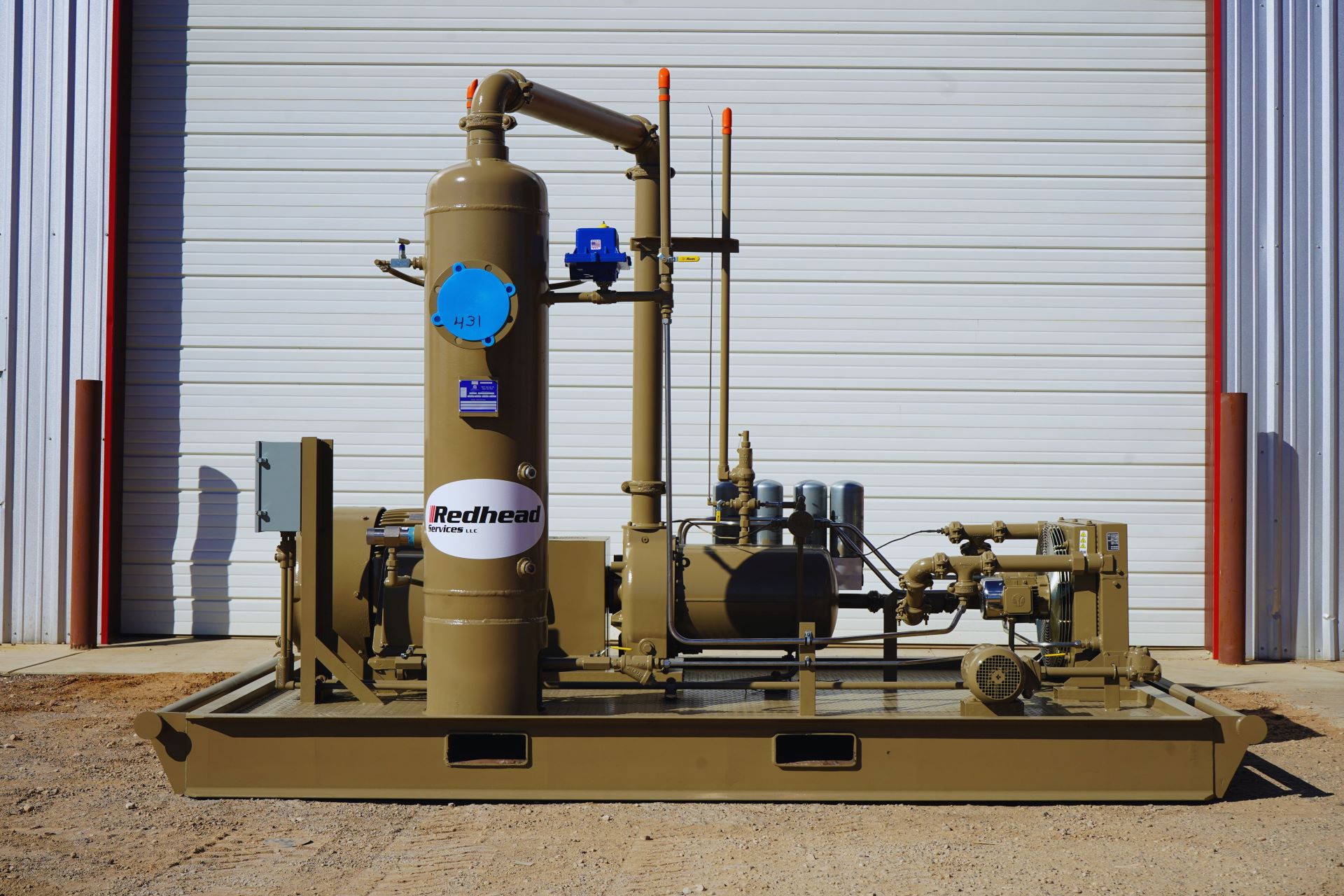
Sizing a wellhead gas compressor is an operating-envelope problem, not a simple horsepower lookup. The package has to move the required gas from the lowest credible suction pressure to the actual discharge pressure while handling changes in flow, gas composition, ambient temperature, and liquid loading. It also needs enough turndown to remain useful as the well changes.
A unit selected from one “normal” data point may run well on startup and poorly six months later. This guide organizes the information needed for a sound application review. Final selection should be completed by qualified compressor and process personnel using verified site data.
What a Wellhead Compressor Is Being Asked to Do
Wellhead compression lowers the pressure against which a well produces and raises the gas to the pressure required by the downstream gathering or processing system. That can help sustain production, but the compressor must stay within its allowable speed, rod load, discharge temperature, power, pressure, and capacity limits.
The central sizing question is therefore not “How many horsepower do I need?” It is: What range of mass flow must the package handle across every credible suction, discharge, composition, and temperature case?
1. Establish Gas Flow for More Than One Date
Start with expected gas volume at standard conditions and the basis for that estimate. Separate produced gas from any other streams that may enter the suction. Identify current rate, peak rate, minimum stable rate, forecast decline, and any intermittent surges caused by separators, controls, or operating cycles.
Build at least three cases:
- Initial or peak case: the highest credible flow and often the highest suction pressure.
- Normal design case: the condition expected for much of the operating period.
- Late-life or low-flow case: lower rate and potentially lower suction pressure, used to test turndown and future usefulness.
If the compressor may serve multiple wells, evaluate combinations rather than simply adding nameplate peaks. Note which wells can flow simultaneously and how the manifold will be controlled.
2. Use Minimum Suction Pressure as a Critical Case
Suction pressure has a major effect on compressor capacity. As inlet pressure falls, the gas is less dense and the compressor must displace more actual volume to move the same standard volume. A package that handles the rate at higher pressure may run out of displacement, speed, or power when the wellhead pressure declines.
Define pressure at the compressor suction flange, not only at the wellhead. Account for pressure loss through separators, coolers, scrubbers, filters, valves, and suction piping. Also set a realistic minimum suction pressure that protects the connected process and stays above the package’s shutdown limits.
3. Verify Maximum Discharge Pressure
Discharge pressure should reflect the highest gathering-system or process pressure the compressor will see, plus the losses between the package and the tie-in point. A compressor selected around today’s average line pressure may overload or trip when the gathering pressure rises.
Check normal, maximum operating, startup, blocked or restricted downstream, and recycle cases. The required compression ratio—absolute discharge pressure divided by absolute suction pressure—drives temperature, efficiency, staging, and mechanical loading. High ratios may require multiple stages with interstage cooling and separation.
4. Supply a Representative Gas Analysis
Gas composition influences molecular weight, compressibility, heating value, power, discharge temperature, cooling duty, and material compatibility. “Natural gas” is not a sufficient composition.
Provide a recent analysis that includes methane, heavier hydrocarbons, nitrogen, carbon dioxide, hydrogen sulfide where applicable, and water content or saturation basis. If composition changes with pressure or over the well’s life, identify the expected range. Heavier or sour gas may change equipment selection, safety controls, seals, metallurgy, ventilation, and maintenance practices.
5. Treat Liquids as a Design Condition
Reciprocating and rotary compressors are intended to compress gas, not liquid. Free liquid reaching a compressor can damage valves, cylinders, rotors, bearings, or piping. Even small recurring carryover can foul coolers and instruments or cause unreliable shutdowns.
Document expected water and hydrocarbon liquid loading, slug potential, suction temperature, piping low points, and seasonal condensation. The package may need an appropriately sized suction scrubber, high-level shutdown, automatic or manual drains, interstage separation, heat tracing, or revised upstream separation. Drain liquids must have a safe destination and an operating procedure.
6. Size for Decline and Turndown
Production decline is one of the most common reasons a wellhead compressor becomes a poor fit. A unit can be oversized after rate drops, leading to excessive recycling, short cycling, valve unloading, inefficient operation, or operation below a stable limit.
Ask how the proposed package controls capacity. Options may include speed control, clearance pockets, unloaders, recycle, cylinder selection, or reconfiguration, depending on compressor type. Each method has limits and efficiency consequences. The useful turndown range should be stated for the actual suction and discharge conditions—not as a generic percentage.
A forecast does not need to be perfect, but it should show how rate and pressure may evolve. The supplier can then determine whether one configurable package covers the period, a smaller future configuration is practical, or a staged equipment plan makes more economic sense.
7. Account for Ambient Conditions and Elevation
High ambient temperature reduces cooling margin and can limit engine or motor output. Cold weather can affect starting, lubrication, drains, instruments, batteries, and liquid freezing. Dust and wind influence air coolers, filtration, enclosure design, and maintenance frequency. Elevation affects available engine power and air-cooling performance.
Supply site elevation, design minimum and maximum ambient temperatures, sun exposure, dust conditions, prevailing wind considerations, electrical classification, available fuel or electrical service, and any noise restrictions. A package suitable at moderate shop conditions may need derating or additional cooling in the field.
8. Check Driver and Utility Constraints
Whether the compressor uses an engine or electric motor, verify power across all cases. Include compressor power, auxiliary loads, startup requirements, driver derating, fuel-gas quality, voltage, phase, frequency, and the reliability of the available utility. Controls, coolers, heaters, pumps, and instrument systems also need a defined power source.
Do not select the driver by matching its nominal rating to one calculated compressor load. The operating map needs adequate margin without creating a chronically underloaded or inefficient driver.
Common Wellhead Compressor Selection Mistakes
- Using only current average conditions. This ignores peak flow, low suction pressure, high discharge pressure, and decline.
- Quoting gauge pressure without confirming the basis. Compression calculations require consistent absolute pressure and temperature units.
- Assuming pipeline pressure is constant. Gathering pressure can move enough to change ratio, load, and capacity.
- Providing no gas analysis. Composition materially affects the application.
- Ignoring liquids. A compressor package cannot correct inadequate upstream liquid separation by itself.
- Buying for maximum rate only. An oversized unit may spend most of its life recycling or cycling.
- Confusing horsepower with capacity. Displacement, pressure ratio, temperature, gas properties, speed, and mechanical limits all matter.
- Leaving controls until the end. Capacity control, shutdowns, remote signals, and restart philosophy affect how the unit operates.
- Overlooking maintenance access. Filters, valves, coolers, drains, belts, ignition components, and major service points need safe access.
Information to Gather Before Requesting a Quote
- Current, minimum, and maximum gas flow, with forecast cases
- Minimum and normal suction pressure at the package
- Normal and maximum discharge pressure at the package
- Suction temperature and expected ambient range
- Complete gas analysis and sour-service requirements
- Water and hydrocarbon liquid loading, slug potential, and drain destination
- Site elevation, electrical area classification, and noise limits
- Available fuel gas or electrical service
- Required control method, communications, alarms, and shutdown signals
- Desired service interval, access constraints, delivery needs, and future tie-ins
Make the Operating Envelope the Basis of the Quote
A useful compressor proposal should show which cases were evaluated and identify the controlling limits. It should also explain expected turndown, staging, cooling, separation, driver capacity, control method, and what changes may be possible as the well declines.
Redhead Services designs and supports configurable wellhead compressor packages for Permian Basin operations. Review availability across our West Texas and Southeast New Mexico service area, or send our team your operating cases for an application review.